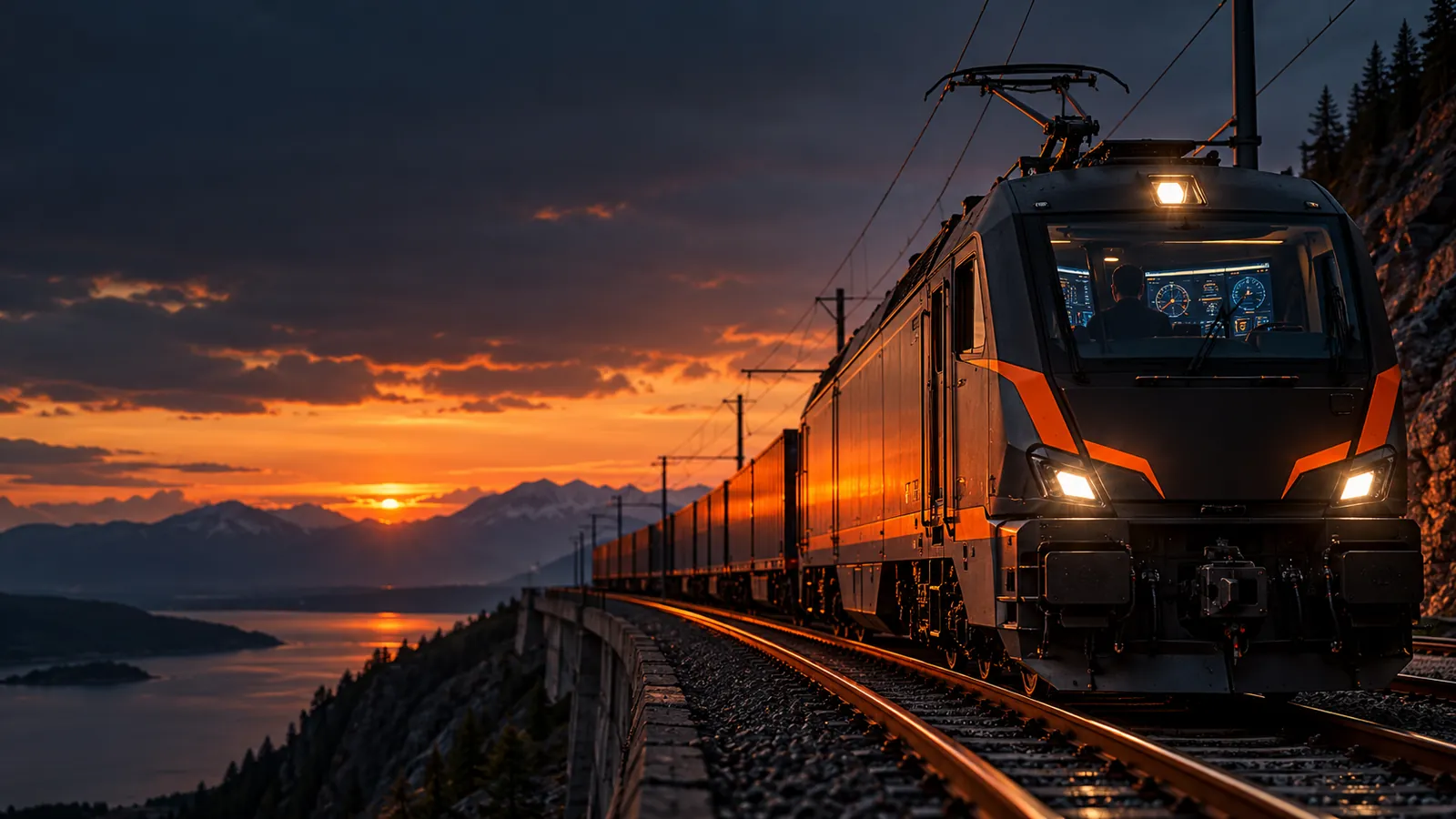
A driver display unit is not an app. The loco pilot looks at it for a fraction of a second between watching the track and the signals, often at night, and acts on what they see.
Fixed places for everything
Every screen keeps the same frame: a status area for identity, mode, time and alarms; a work area for the task; and a navigation row mapped to physical keys. The eye learns where to look.
One colour language
Green is normal, yellow a warning, orange a pre-alarm and red an alarm. Grey means unknown or isolated. The same meanings hold on every icon, gauge and indicator, so a pilot never has to interpret colour twice.
Screens never touch the bus
Locomotive signals arrive over CAN. Middleware decodes them, applies thresholds and decides alarm states before anything reaches the screen, so a bad frame cannot freeze the display.